History
Year Zero: How the Khmer Rouge Tried to Erase Cambodia’s Past
On 17 April 1975 the Khmer Rouge took Phnom Penh and set out to restart Cambodia from nothing. Here is what Year Zero meant, what it destroyed, how many died, and what the tribunal later found.
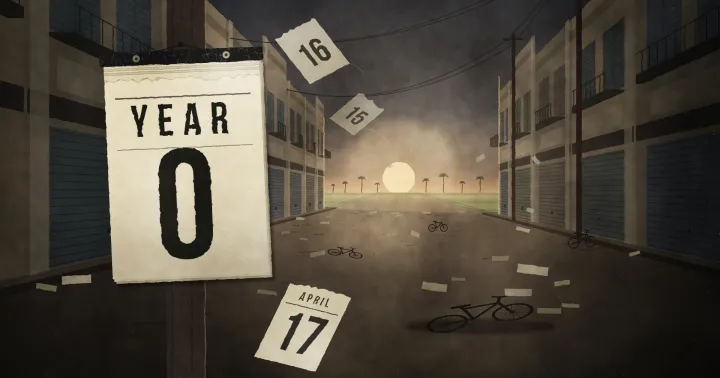
Year Zero is the name given to the Khmer Rouge’s attempt to wipe out Cambodia’s past and rebuild the country from nothing, starting on 17 April 1975, the day its fighters captured Phnom Penh. Within days they emptied the cities, and in less than four years in power they abolished money, markets, schools and religion, in a revolution that cost roughly 1.5 to 2.2 million lives.
The phrase is not the regime’s own. It comes from the title of a 1977 book by a French priest who watched the capital being emptied, and historians have found no evidence that the Khmer Rouge ever used it. It has stuck because it names the idea so exactly: a state that declared everything before its victory worthless, and treated the people who remembered that world as a problem to be solved.
Key facts at a glance:
- When: the Khmer Rouge, formally the Communist Party of Kampuchea, ruled Cambodia from 17 April 1975 until 7 January 1979, when Vietnamese troops and Cambodian rebels took Phnom Penh.
- The evacuation: about two million people, more than a million of them wartime refugees, were driven out of Phnom Penh in the first days and told they could come back in two or three days.
- What was abolished: money, free markets, normal schooling, private property, religious practice and traditional culture.
- The death toll: Yale’s Cambodian Genocide Program estimates about 1.7 million deaths, 21 percent of the population. A 2015 demographic study puts the most likely range at 1.5 to 2.25 million.
- The verdicts: a UN-backed court convicted three senior figures and, in 2018, found genocide against Cambodia’s Vietnamese minority. Pol Pot died in 1998 without facing trial.
What was Year Zero in Cambodia?
The Khmer Rouge wanted a country with no rich, no poor and no exploitation: a nation of peasants working the land together, sealed off from the outside world and from its own history. The Documentation Center of Cambodia (DC-Cam), the largest archive of the period, sums up the leaders’ view in its school history of the regime: they “felt that cities were evil and that only peasants in the countryside were pure enough for their revolution.”
The movement ruled from the shadows. It called itself Angkar, “the Organization,” and kept the Communist Party’s very existence secret until 1977. Pol Pot, born Saloth Sar, was the party secretary and became prime minister of the new state, Democratic Kampuchea, in 1976. Angkar was to be everyone’s “mother and father.” Older loyalties, to family, temple, village and king, were supposed to give way to it.
The rewriting reached the party’s own past. In March 1976 its Central Committee moved the party’s founding date from 1951 to 1960, so that the years when Vietnamese communists had guided it no longer counted. Anyone who had joined before 1960 was no longer considered a member. Even the revolution’s history had to start at the right moment.
Did the Khmer Rouge really call it Year Zero?
Probably not. The phrase comes from Cambodge, année zéro (1977) by François Ponchaud, a French Catholic missionary who lived through the fall of Phnom Penh. It appeared in English as Cambodia: Year Zero in 1978, and John Pilger’s 1979 documentary Year Zero: The Silent Death of Cambodia spread it further. The historian Ian Harris, drawing on the Khmer Rouge specialist Steve Heder, notes that there is no evidence the Khmer Rouge themselves used the term, and none that it was ever formally declared. The label echoes the French revolutionaries, who restarted their calendar at Year I.
Nor did the regime renumber the years. Its own paperwork kept ordinary Western dates. The constitution of Democratic Kampuchea was promulgated on 5 January 1976, and the party’s economic blueprint was a Four-Year Plan for 1977 to 1980. What the regime made sacred was a single day. Its national anthem was titled “17 April, the Great Victory,” and the people driven out of the cities were branded “17 April people.” Which side of that date you had been on decided how you would be treated.
17 April 1975: the evacuation of Phnom Penh
On 17 April 1975, after five years of civil war, Khmer Rouge fighters entered Phnom Penh. Many residents came out waving white cloths, expecting peace. Within hours, soldiers were firing into the air and ordering everyone to leave.
The capital was swollen with people who had fled the fighting. DC-Cam estimates that about two million residents, including more than a million wartime refugees, were forced into the countryside, and that within a week the other cities held by the old government had been emptied too. People were told the Americans were about to bomb the city and that they need not lock their homes, because they would be back in two or three days. Testifying before the Khmer Rouge tribunal in 2013, Ponchaud recalled the order to leave “because the American soldiers will bombard the city” (Cambodia Tribunal Monitor). He died in January 2025.
There were no exceptions. Hospitals were emptied of their patients. Thousands of evacuees, above all the very young, the old and the sick, died on the roads, and children were separated from their parents in the crowds. Afterward Phnom Penh became a ghost city of about 40,000 people, mostly soldiers, officials and factory workers. Many evacuees were later moved again, and in 1976 mass starvation followed among those deported to the northwest.
The leaders gave shifting reasons. Ieng Sary, the foreign minister, later blamed a lack of transport to bring food to the cities. Pol Pot, visiting China in 1977, said the evacuation had broken up an “enemy spy organization.” Most historians see the ideology underneath: the cities themselves were to be abolished. Decades later, the Khmer Rouge tribunal ruled that the forced transfer of the population was a crime against humanity.
What did the Khmer Rouge abolish? Money, schools, religion and family
Emptying the cities was only the start. According to DC-Cam, the Khmer Rouge “abolished money, free markets, normal schooling, private property, foreign clothing styles, religious practices, and traditional Khmer culture.” Schools, pagodas, mosques, churches, universities and shops were closed or turned into prisons, stables, re-education camps and granaries.
- Money and property: money was abolished and private property confiscated. In 1976 people had to hand over even their kitchen utensils for collective use, and meals were eaten in communal halls.
- Schools: universities and schools were shut. Children got a little reading under the trees, mostly political instruction, and then went to work. One slogan ran: “Study is not important. What’s important is work and revolution.”
- Religion: pagodas, mosques and churches were closed, and religious ceremonies were banned. The Cham, Cambodia’s Muslim minority, were forbidden to speak their language or practice Islam.
- Family: husbands and wives were assigned to separate work units, and children were separated from their parents. Angkar arranged marriages in mass ceremonies.
The regime that promised equality created two new classes. “Base people,” who had lived in Khmer Rouge zones before the victory, had some standing. “New people,” the evacuees, were treated as parasites and prisoners of war. Many survivors remember the slogan aimed at them: “To keep you is no gain; to lose you is no loss.”
Knowledge itself became dangerous. Doctors, teachers and engineers hid their professions, and DC-Cam records that no one dared wear glasses or speak a foreign language, because both marked a person as educated. Soldiers and officials of the old government were hunted down, often with their relatives, and an entire family could be killed for one member’s mistake: the same logic of kin punishment traced in our article on being punished for your parents’ crimes. Most ethnic Vietnamese were expelled in 1975, and those who stayed were killed systematically in 1977 and 1978. Meanwhile the party turned on its own, hunting “hidden enemies burrowing from within” and arresting hundreds of fellow communists each month.
How many people died in the Cambodian genocide?
No one knows exactly, and the honest answer is a range. People died of starvation, overwork and untreated disease as well as execution, and every estimate depends on reconstructing the population before and after the regime.
- Yale’s Cambodian Genocide Program: “approximately 1.7 million people lost their lives (21% of the country’s population),” according to the program’s page.
- The demographic modeling: in 2015 the UCLA demographer Patrick Heuveline tested the 12 most-cited estimates. His simulations gave a median of 1.9 million excess deaths, 21 percent of the population at risk, and a roughly 70 percent chance that the true toll lay between 1.5 and 2.25 million. He found “striking” errors in the highest (3.3 million) and lowest (700,000) estimates.
- The range most often cited: the genocide scholar Craig Etcheson puts it at 1.7 to 2.2 million, with the more careful recent studies toward the top.
Estimates of how many died by violence, mostly execution, run from about 500,000 in DC-Cam’s history to roughly 1.1 million in Heuveline’s earlier work. DC-Cam’s mapping project has identified more than 19,733 mass graves, each holding at least four bodies, along with 196 prisons and 81 memorials.
The best known of those prisons was S-21, set up in a former Phnom Penh high school, which is now the Tuol Sleng Genocide Museum. The tribunal found that its commander detained no fewer than 12,273 people there and that at least 11,742 were executed. DC-Cam counts only about a dozen survivors.
The Khmer Rouge tribunal: what the judges found
The regime fell on 7 January 1979, when Vietnamese forces and the United Front for the National Salvation of Kampuchea took Phnom Penh. The Khmer Rouge regrouped on the Thai border, and their government, later the largest part of an exile coalition, kept Cambodia’s seat at the United Nations until 1990. Pol Pot died on 15 April 1998 without ever facing a court, and by 1999 the movement had collapsed.
Justice came late, through the Extraordinary Chambers in the Courts of Cambodia (ECCC), a Cambodian court set up under an agreement with the United Nations. Its investigations and trials ran from 2006 to 2022.
- Case 001: Kaing Guek Eav, known as Duch, the commander of S-21, was convicted of crimes against humanity and grave breaches of the Geneva Conventions on 26 July 2010. On appeal in February 2012 his sentence was raised to life imprisonment. He died in 2020.
- Case 002/01: on 7 August 2014, Nuon Chea, the party’s deputy secretary, and Khieu Samphan, the former head of state, were sentenced to life for crimes against humanity, including the forced evacuation of the cities and the execution of former government soldiers at Tuol Po Chrey. The life sentences were upheld in November 2016.
- Case 002/02: on 16 November 2018, both men were convicted of genocide against the Vietnamese, along with crimes against humanity and grave breaches. Nuon Chea was also convicted of genocide against the Cham, but he died in August 2019 before his appeal was decided, so those convictions never became final. The Supreme Court Chamber upheld Khieu Samphan’s life sentence on 22 September 2022.
Others escaped judgment. The former foreign minister Ieng Sary died during his trial in 2013. His wife, Ieng Thirith, was found unfit to stand trial and died in 2015. Cases against four other suspects ended without a trial. Three convictions in sixteen years can look small against the scale of the crime, but the court left an archive of more than 1,350 judicial decisions, and since January 2023 it has carried on only residual work, such as protecting witnesses and supervising sentences.
Remembering Year Zero, 50 years on
April 2025 marked 50 years since the fall of Phnom Penh. In July 2025, UNESCO’s World Heritage Committee inscribed three Khmer Rouge sites on its list as places of memory: the Tuol Sleng Genocide Museum, the Choeung Ek killing field and M-13, one of the most important early Khmer Rouge prisons, in Kampong Chhnang province. Al Jazeera called it Cambodia’s first nomination of a modern, non-classical site.
Memory has also moved into the classroom. In 2007 a government commission approved DC-Cam’s A History of Democratic Kampuchea, the first history of the period written by a Cambodian, Khamboly Dy, as supplementary material for teaching high school students.
That may be the deepest answer to Year Zero. The regime’s project depended on forgetting: on evacuees who could not go home, children who learned only what Angkar taught, and a party that rewrote its own birthday. Archives, survivors’ testimony and court records are how a society refuses to start again from nothing.
A calendar that starts again: The Thirtieth of February
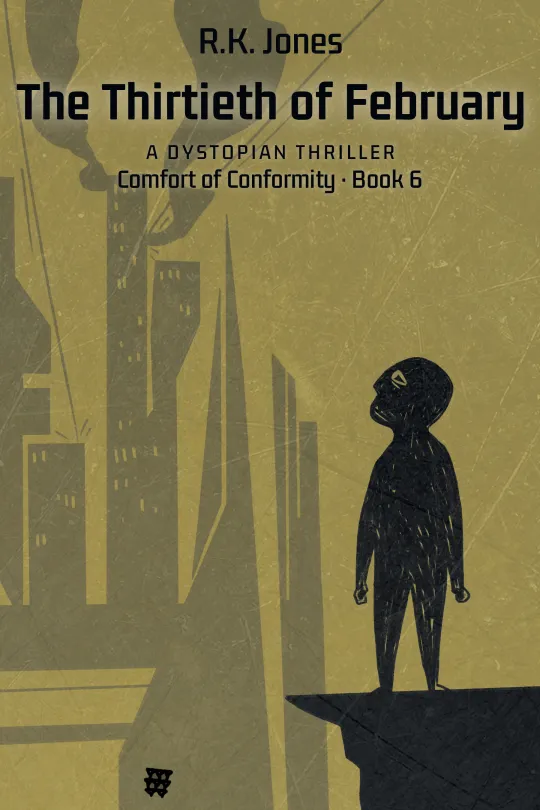
What Cambodians lived through needs no fictional embellishment, and their story is not a plot device. But the idea at the heart of Year Zero, a government declaring that nothing before its victory counts, is one that dystopian fiction keeps returning to. R.K. Jones’s coming-soon thriller The Thirtieth of February, Book 6 of the Comfort of Conformity series, imagines that rupture in a future Australia.
It is the 30th of February, in the 7th year of the Founders. Nothing came before it.
In New Australia, every date before Transition Day has been declared void, citizens carry chips at the base of the skull, and the past is exactly what the Founders say it was. Dr. Matt Harris remembers serving as a surgeon in a war. Then he is called to chip a boy in open court, and the boy shouts the one thing nobody is allowed to say: what year it really is.
The novel’s Year One is invented. Cambodia’s was not, and the best way to honor the people it consumed is to keep their history accurate. For a stranger, gentler case of rulers bending the calendar, see the story of the real February 30.
Sources
- A History of Democratic Kampuchea (1975-1979), Khamboly Dy, Documentation Center of Cambodia (2007)
- Mapping of Cambodia Killing Fields (1975-1979), Documentation Center of Cambodia
- Cambodian Genocide Program, Genocide Studies Program, Yale University
- Chronology of Cambodian Events Since 1950, Genocide Studies Program, Yale University
- UCLA demographer produces best estimate yet of Cambodia’s death toll under Pol Pot, UCLA Newsroom (2015)
- Patrick Heuveline, The boundaries of genocide, Population Studies (2015), abstract via IDEAS/RePEc
- Craig Etcheson, Khmer Rouge Victim Numbers, Estimating, Encyclopedia of Genocide and Crimes Against Humanity
- Walking in Slow Motion: French Priest Testifies on Civil War and Evacuation of Phnom Penh, Cambodia Tribunal Monitor (2013)
- Kaing Guek Eav (Duch), charged person profile, ECCC
- Nuon Chea, charged person profile, ECCC
- Khieu Samphan, charged person profile, ECCC
- ECCC timeline, Extraordinary Chambers in the Courts of Cambodia
- Extraordinary Chambers in the Courts of Cambodia, official site
- Case 002/01, International Crimes Database (Asser Institute)
- Cambodia: the cases, Simon-Skjodt Center for the Prevention of Genocide, USHMM
- Sites of Khmer Rouge execution, torture in Cambodia added to UNESCO list, Al Jazeera (2025)
- Year Zero (political notion), Wikipedia
- François Ponchaud, Wikipedia
- Lachlan Peters, “Year Zero”: The Origins and Problems of an Enduring Historical Label, In the Shadows of Utopia (2024)
Questions people ask
What was Year Zero in Cambodia?
Year Zero is the name given to the Khmer Rouge’s attempt to erase Cambodia’s past and rebuild the country from nothing after they captured Phnom Penh on 17 April 1975. They emptied the cities and abolished money, markets, normal schooling, private property and religious practice.
Did the Khmer Rouge actually call it Year Zero?
Probably not. The phrase comes from the title of François Ponchaud’s 1977 book Cambodge, année zéro, and historians have found no evidence that the Khmer Rouge used it. The regime’s documents kept ordinary Western dates, though it treated 17 April 1975 as the revolution’s founding day.
Why did the Khmer Rouge evacuate Phnom Penh?
Residents were told the Americans were about to bomb the city and that they could return in two or three days. Leaders later cited food shortages or enemy spies, but most historians see an ideological aim: to abolish the cities and turn Cambodia into a nation of peasants.
How many people died under the Khmer Rouge?
Estimates vary. Yale’s Cambodian Genocide Program puts the toll at about 1.7 million, 21 percent of the population, and a 2015 demographic study found the most likely range was 1.5 to 2.25 million, from execution, starvation, overwork and disease.
Was anyone punished for the Cambodian genocide?
Yes, but only three senior figures. The UN-backed Khmer Rouge tribunal sentenced S-21 prison chief Duch, deputy party leader Nuon Chea and former head of state Khieu Samphan to life imprisonment, and in 2018 found genocide against the Vietnamese minority. Pol Pot died in 1998 without facing trial.