Science
Is a Zombie Virus Possible? The Real Biology of Zombies
No virus can raise the dead, but nature does make zombies of a sort. Rabies, a body-snatching fungus, a parasite that makes rats fearless and a 48,500-year-old permafrost virus show what’s real.
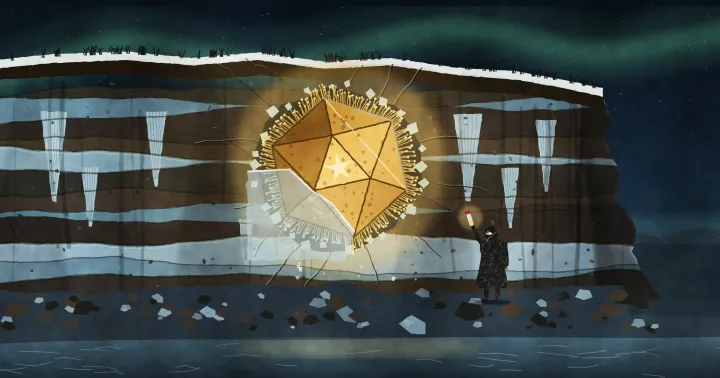
Is a zombie virus possible? Not the movie kind: no virus can bring the dead back to life, and no known infection turns people into mindless biters who pass it on within minutes. But nature does make “zombies” of a sort, from rabies to a fungus that marches ants to their deaths, and in 2023 scientists revived a virus that had sat in Siberian permafrost for more than 48,500 years, which headlines promptly called a “zombie virus.”
The real story is stranger than yes or no, and it says a lot about what scientists actually lose sleep over.
- No virus can raise the dead. Brain cells start dying within minutes without oxygen, and viruses can only copy themselves inside living cells.
- Rabies is the closest real thing. It inflames the brain and can cause agitation, hallucinations, biting and a panicked fear of water. Once symptoms appear it is virtually always fatal, but prompt treatment after exposure prevents it.
- The “zombie ant” fungus is real. Ophiocordyceps makes infected ants leave their trails, clamp onto a leaf vein around noon and die, before a fungal stalk sprouts from the head.
- The permafrost “zombie virus” infects amoebas. Pandoravirus yedoma poses no risk to people. The study was a warning about what else might be in the ice.
- The real worries are less cinematic: old pathogens in thawing ground, fungi adapting to warmer temperatures, and new viruses nobody has identified yet.
Is a zombie virus possible? The short answer
Start with the classic, shambling version: the dead getting up. That fails on basic physiology. MedlinePlus, the US National Library of Medicine’s health site, notes that some brain cells “start dying within minutes” once their oxygen supply stops. A virus can’t fix that. Viruses don’t power anything; they borrow the machinery of living cells to copy themselves, and a dead cell has nothing left to borrow.
The faster, “infected” version from modern films is harder to dismiss, because its victims are still alive. Here biology has real precedents, which scientists call host manipulation: a parasite changes its host’s behavior in ways that help it spread. A 2011 study of zombie ants put it in one line: “Host behavior is an extended phenotype of the parasite.” The catch is that every real example is slow, narrow and finely tuned to one kind of host.
Rabies: the closest thing to a real zombie virus
If any virus deserves the title, it’s rabies. According to the World Health Organization, it spreads through saliva, usually by bites or scratches, and dogs cause up to 99% of human cases. The virus can lie low for a long time: incubation is typically two to three months, though it can range from a week to a year. As it reaches the central nervous system, it inflames the brain and spinal cord.
The symptoms read like a horror script. WHO says “furious” rabies, the more common form, brings hyperactivity, hallucinations, poor coordination, hydrophobia (fear of water) and aerophobia (fear of drafts or fresh air). The CDC’s list of advanced symptoms includes agitation, lots of saliva, “aggressive behavior like thrashing and biting,” and being very thirsty but panicked by fluids. It looks almost purpose-built for transmission: a mouth full of infectious saliva and a host that may bite.
A 2017 study in Scientific Reports found that part of the virus’s outer protein resembles a snake toxin and blocks a type of nicotinic acetylcholine receptor. Injected into the central nervous systems of mice, those fragments made the animals more active, which the authors call “a mechanistic explanation for the behavioural changes” in infected hosts.
Here the zombie comparison breaks down. In furious rabies, death follows within a few days of symptoms, from cardio-respiratory arrest. And WHO says person-to-person spread through bites or saliva is “theoretically possible but has never been confirmed.” The real zombie virus doesn’t build a horde.
It is still a serious killer. WHO’s fact sheet, as of late 2026, cites about 44,000 rabies deaths a year (a 2021 estimate, likely too low), 40% of them children under 15. Yet it is preventable: the US reports fewer than 10 deaths a year, while around 100,000 Americans get post-exposure vaccination. If an animal that could carry rabies bites or scratches you, contact a doctor or your local health department promptly.
The zombie ant fungus, and the real fungus behind The Last of Us
The most famous zombie-maker in nature is a fungus. In a Thai rainforest, carpenter ants infected with Ophiocordyceps unilateralis leave their colony’s trails in the canopy and wander alone through the undergrowth, in what David Hughes and colleagues called a random “drunkard’s walk,” often convulsing and falling.
Then comes the death grip. In their 2011 study in BMC Ecology, infected ants bit into veins on the underside of leaves about 25 centimeters above the soil, and the switch to biting was abrupt and synchronized around solar noon. Within two to three days of death, fungal threads were growing out of the body. Eventually a stalk grows from the back of the ant’s head and fires its spores, ready for the next victim.
How does a fungus steer an ant? A 2017 study in PNAS used electron microscopy and a deep-learning model to map the fungus inside infected ants. Fungal cells had spread through the body, invading muscle fibers and forming networks around them, but were not found in the brain. The fungus seems to work the body, not the mind.
It is also ancient: fossil leaves from Messel, Germany, about 48 million years old, carry the same death-grip scars. And new zombie-makers keep turning up. In January 2025, scientists led by Harry Evans of CABI described Gibellula attenboroughii, a fungus named after Sir David Attenborough and first spotted during filming of the BBC’s Winterwatch in Northern Ireland. Infected cave spiders, normally reclusive, left their webs to die in the open on cave ceilings and walls, much like zombie ants.
Could the Last of Us fungus infect humans?
In the TV series of The Last of Us, as a 2025 University of Colorado Boulder article explains, global warming raises temperatures enough for a mutated Cordyceps fungus to infect humans. Mycologists are skeptical. Human body temperature averages around 97 to 99°F, and CU Boulder mycologist C. Alisha Quandt points out that even 90°F weather is cooler than that. A 2009 study of 4,802 fungal strains by Vincent Robert and Arturo Casadevall found that most can’t grow at mammalian temperatures; every 1°C rise between 30°C and 40°C excluded about another 6% of them.
The zombie fungi are also specialists. About 35 Ophiocordyceps species are known to turn insects into zombies, National Geographic reported, each matched to particular hosts: a strain from an ant in Thailand can’t infect a different ant species in Florida. João Araújo of the New York Botanical Garden told the magazine that infecting mammals “would require millions of years of genetic changes.”
Toxoplasma: the parasite that makes rats fearless
Toxoplasma gondii is a parasite whose definitive host, the one it must reach to complete its life cycle, is the cat. To get from a rat to a cat, it needs the rat to be eaten. In a classic 2000 experiment, Berdoy, Webster and Macdonald found that infected rats lost their natural aversion to areas with signs of cats and, in some cases, developed what the authors called “an imprudent attraction.” Their other behaviors seemed intact, which makes it more unsettling.
People catch it too, from undercooked meat, unwashed produce or cat feces. The CDC says over 40 million Americans are infected; most healthy people have no symptoms, though pregnant women and people with weakened immune systems need to be careful.
Does it make people reckless? Headlines love the idea, but the evidence is weak. A 2016 PLOS ONE study of 837 people from a population-representative birth cohort found “little evidence” that infection was linked to psychiatric disorder, poor impulse control, personality problems or cognitive impairment; infected people did worse on just one of 14 neuropsychological measures.
The 48,500-year-old “zombie virus” from Siberian permafrost
The story that made “zombie virus” a search term came out of frozen ground. About a quarter of the Northern Hemisphere sits on permafrost, and as the climate warms it is thawing. In February 2023, a team including Jean-Michel Claverie published a study in Viruses describing 13 new viruses revived from ancient Siberian permafrost and other frozen samples.
The oldest, Pandoravirus yedoma, has unusually large particles, about a thousandth of a millimeter long. It came from permafrost radiocarbon-dated to more than 48,500 years ago, a floor rather than an exact age, set by the range of radiocarbon dating. Others came from a 27,000-year-old sample full of mammoth wool and from the frozen gut of a Siberian wolf.
Now the part most headlines skipped. Every one of these viruses infects only Acanthamoeba, a single-celled amoeba. The team chose amoeba viruses on purpose, as bait that would eliminate “any risk for crops, animals or humans,” and called the biohazard “totally negligible.”
So why publish? Because the point wasn’t reassuring. If amoeba viruses stay infectious for tens of thousands of years in the ice, the authors argue, many other viruses probably can too. Their abstract warns that the scarcity of earlier reports “wrongly suggests” that “zombie viruses” are not a public health threat. How long such viruses would last once exposed to sunlight, oxygen and heat is, in their words, “yet impossible to estimate.”
There is a real precedent, though it was a bacterium. In the summer of 2016, anthrax broke out on the Yamal Peninsula in northwest Siberia after some 70 years without an outbreak, killing thousands of reindeer; The Moscow Times reported that a 12-year-old boy died after eating infected venison. The trigger was blamed on spores from old infected carcasses, released as permafrost thawed in a heat wave. A 2021 study in EcoHealth adds nuance: the ground had been thawing fast for six years beforehand, an extremely dry summer likely intensified the spread, and reindeer vaccination had stopped in 2007.
Newer work suggests the ice doesn’t wake up all at once. In a study published in September 2025 in JGR Biogeosciences, a University of Colorado Boulder team revived microbes, some about 40,000 years old, from a permafrost tunnel in Alaska. They took months to become active, and lead author Tristan Caro said they “likely couldn’t infect people.”
Why a true zombie virus is so unlikely
Line up the real cases and the movie version falls apart.
- Speed. On screen, a bite turns someone in minutes. Real infections need time to multiply and reach the brain; rabies usually incubates for two to three months.
- Survival. A virus needs living cells, and rabies kills within days of the first symptoms. A dead host is a dead end for a virus.
- Specificity. Real behavior-manipulators are specialists: a zombie ant fungus adapted to one ant species can’t infect another, let alone us.
- Transmission. Rabies has never been confirmed to spread from person to person through bites, the one route zombie stories depend on.
- Complexity. The ant fungus produces one stereotyped act: wander, climb, bite, die. A hunting human is a different order of problem.
What scientists actually worry about
The real risks look less like zombies and more like quiet trends already under way.
Fungi learning to take the heat. In October 2022, WHO published its first-ever list of fungal priority pathogens: 19 fungi in three priority groups. WHO warned that fungal infections are growing and becoming more resistant, with only four classes of antifungal medicines available, and that global warming and travel are widening their range. The yeast Candida auris emerged on three continents at about the same time; Casadevall and colleagues have proposed, as a hypothesis, that it “may be the first example of a new fungal disease” to emerge from climate change.
What’s in the thaw. Claverie’s team expects thawing permafrost to release unknown viruses, and notes the result would be far worse if they infected plants, animals or people.
Disease in wildlife. Chronic wasting disease, a prion disease of deer, elk and moose, has been reported in wild deer in 36 US states and five other countries, per the CDC’s January 2026 update. Infections in people “have never been reported,” the CDC says, though it isn’t known whether people could be infected.
The virus nobody has met yet. WHO’s list of priority diseases ends with Disease X, a placeholder for a serious international epidemic caused by a pathogen not yet known to cause human disease. Our Disease X explainer covers it in depth. That, not the walking dead, is what public health planners prepare for.
Going Viral: when no database can identify the virus
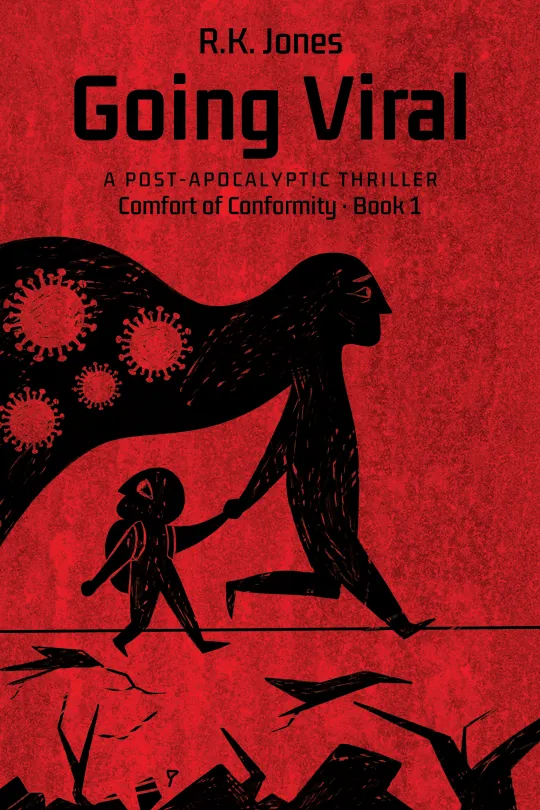
Fiction gets to skip the slow biology. R.K. Jones’s post-apocalyptic thriller Going Viral, Book 1 of the Comfort of Conformity series, begins with exactly the kind of sample virologists dread.
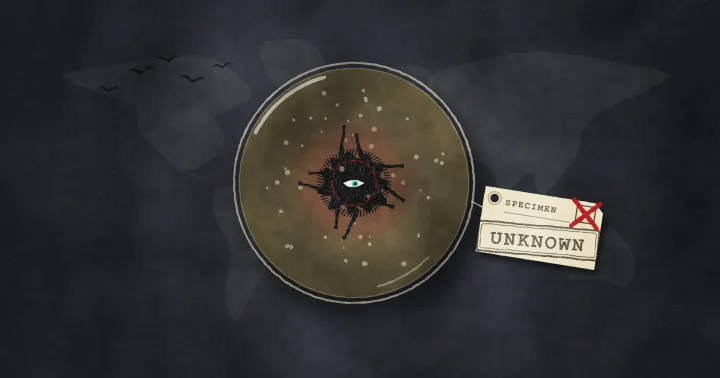
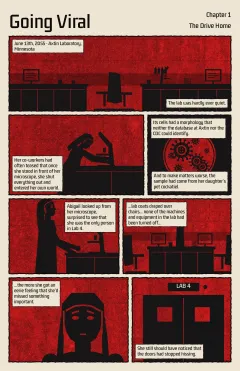
Dr. Abigail Swanson studies viruses for a living. On June 13, 2055, the sample under her microscope holds cells no database can identify. The birds outside her Minnesota home have started killing each other. By nightfall, so have the people. Within days her family is torn apart and the country she knew is gone. With her young daughter Sapphire and a handful of strangers, Abigail heads south for a forest in Alabama, hoping to build something worth surviving for.
But the infected aren’t the only danger. Missiles are falling on towns with people still in them, and the survivors on the road can be as deadly as anything they’re running from. Real zombies may be impossible, but a virus no scientist has seen before is not. Going Viral is coming soon.
Sources
- Rabies fact sheet, World Health Organization
- About Rabies, Centers for Disease Control and Prevention
- Rabies virus modifies host behaviour through a snake-toxin like region of its glycoprotein, Hueffer et al., Scientific Reports (2017)
- Cerebral hypoxia, MedlinePlus, US National Library of Medicine
- Virus, Talking Glossary of Genomic and Genetic Terms, National Human Genome Research Institute
- Behavioral mechanisms and morphological symptoms of zombie ants dying from fungal infection, Hughes et al., BMC Ecology (2011)
- Three-dimensional visualization and a deep-learning model reveal complex fungal parasite networks in behaviorally manipulated ants, Fredericksen et al., PNAS (2017)
- Ancient death-grip leaf scars reveal ant-fungal parasitism, Hughes, Wappler and Labandeira, Biology Letters (2011)
- Newly discovered “zombie” fungus that infects cave spiders named after Sir David Attenborough, CABI via EurekAlert! (2025)
- Don’t fear fungi, University of Colorado Boulder (2025)
- Vertebrate endothermy restricts most fungi as potential pathogens, Robert and Casadevall, Journal of Infectious Diseases (2009)
- Could a parasitic fungus evolve to control humans? National Geographic (2023)
- Fatal attraction in rats infected with Toxoplasma gondii, Berdoy, Webster and Macdonald, Proceedings of the Royal Society B (2000)
- About Toxoplasmosis, Centers for Disease Control and Prevention
- Is Toxoplasma gondii infection related to brain and behavior impairments in humans? Sugden et al., PLOS ONE (2016)
- An Update on Eukaryotic Viruses Revived from Ancient Permafrost, Alempic et al., Viruses (2023)
- An Update on Eukaryotic Viruses Revived from Ancient Permafrost (preprint, full text), bioRxiv
- Ancient dormant viruses found in permafrost, once revived, could infect amoebas, Phys.org (2023)
- Child dies of anthrax in Russia’s northern Siberia, The Moscow Times (2016)
- Climatic Factors Influencing the Anthrax Outbreak of 2016 in Siberia, Russia, Ezhova et al., EcoHealth (2021)
- Researchers wake up microbes trapped in permafrost for thousands of years, University of Colorado Boulder (2025)
- WHO releases first-ever list of health-threatening fungi, World Health Organization (2022)
- On the Emergence of Candida auris: Climate Change, Azoles, Swamps, and Birds, Casadevall, Kontoyiannis and Robert, mBio (2019)
- About Chronic Wasting Disease, Centers for Disease Control and Prevention
- Prioritizing diseases for research and development in emergency contexts, World Health Organization
Questions people ask
Is a zombie virus possible?
Not the movie kind. No virus can bring the dead back to life, because viruses can only copy themselves inside living cells, and no known infection turns people into biters who spread it within minutes. But real parasites, such as rabies, the Ophiocordyceps fungus and Toxoplasma, do change their hosts’ behavior.
What is the 48,500-year-old zombie virus?
It is Pandoravirus yedoma, one of 13 viruses that a team including Jean-Michel Claverie revived from ancient Siberian permafrost and other frozen samples, published in the journal Viruses in February 2023. It infects only amoebas and poses no known risk to people; the researchers used amoeba viruses to show that ancient viruses can stay infectious in frozen ground.
Is rabies a zombie virus?
It is the closest real example. Rabies inflames the brain and can cause agitation, hallucinations, biting and a panicked fear of water, but it usually takes two to three months to cause symptoms, kills within days once they start, and person-to-person spread through bites has never been confirmed. If an animal that could carry rabies bites or scratches you, see a doctor or your local health department promptly.
Can the Last of Us fungus infect humans?
Experts say no. The zombie-ant fungi in the Ophiocordyceps group are specialists matched to particular insect hosts, and human body temperature is too hot for most fungi to grow. João Araújo of the New York Botanical Garden told National Geographic that infecting mammals would take millions of years of genetic changes.
Is the zombie ant fungus real?
Yes. Ophiocordyceps unilateralis makes infected carpenter ants leave their colony’s trails, bite into a leaf vein around solar noon and die there. A few days later fungal threads grow out of the body, and eventually a stalk sprouts from the ant’s head to release spores.