Science
Can Scientists Read Your Memories? What Brain Decoding Can Really Do
Brain decoders can now rebuild rough images, the gist of stories and even descriptions of recalled scenes, but only from willing volunteers. Here is what’s real in 2026, what isn’t, and who protects your brain data.
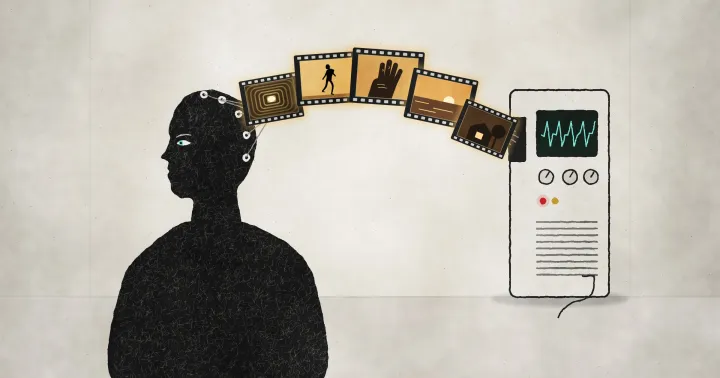
Scientists cannot read your memories the way a computer reads a file. No machine can scan a brain and play back your tenth birthday, and every system that comes close needs a willing volunteer, personal training data, and either a room-sized scanner or electrodes in the brain. What researchers can do, as of late 2026, is pull rough fragments out of brain activity: a blurry version of a photo someone is looking at, the gist of a story they are hearing, a one-line description of a video clip they are recalling. In mice they have gone further, switching a specific memory on with light and even planting a false one. So can memories be extracted? Not yet. Here is how close the science has come.
The key facts:
- In mice, memories can be switched on and even faked. MIT researchers triggered a fear memory with light in 2012 and created a false one in 2013, using techniques that can’t currently be used in people.
- Brain scans can become rough pictures and sentences. Since 2023, AI-assisted fMRI decoders have rebuilt approximate images people were viewing and the gist of stories they heard or imagined.
- Recall is the hardest part. In a 2025 “mind captioning” study, the right remembered video clip was picked out of 100 candidates nearly 40 percent of the time, for the best performers.
- Everything still needs consent. The decoders work only on the cooperating person they were trained on.
- No pill erases a memory. Propranolol has blunted the fear attached to a memory in some studies, but clinical results are mixed.
- The law is catching up. As of late 2026, six US states have passed laws covering neural data, and Chile protects brain activity in its constitution.
Can memories be extracted? What the engram experiments showed
Neuroscientists call the physical trace a memory leaves in the brain an engram. In March 2012, Susumu Tonegawa’s lab at MIT reported in Nature that it could switch one on.
The team worked with genetically engineered mice and optogenetics, a technique that controls cells with light. While a mouse learned to fear a chamber where it got a mild foot shock, the active cells in its dentate gyrus, part of the hippocampus, were tagged with a light-sensitive protein. Later, in a different chamber, the researchers sent pulses of light down tiny optical fibers into those cells. The mice froze in a defensive crouch, as if they were back where they had been shocked. “Our results show that memories really do reside in very specific brain cells,” co-author Xu Liu told MIT News.
In July 2013, the same lab published something stranger in Science. Mice explored a safe chamber while the cells encoding it were tagged. The next day, in a second chamber, they got a mild shock at the moment light reactivated their memory of the first one. Back in the safe chamber, they froze, afraid of a place where nothing bad had ever happened to them. The lab had planted a false memory, and Tonegawa noted that the brain’s recall mechanism is the same “whether it’s a false or genuine memory.”
In 2016 the lab showed that mice with early Alzheimer’s-like symptoms, which showed no fear when put back where a frightening experience had happened, still froze when the right cells were lit. The catch, as MIT’s own report put it, is that optogenetics cannot currently be used in humans.
Notice what these experiments did. They found which cells hold a memory and made those cells fire. Nobody read out what the memory contained.
Can AI reconstruct images from brain scans?
Reading content takes a different toolkit: functional MRI plus machine learning. In 2023, Yu Takagi and Shinji Nishimoto of Osaka University used brain activity to steer Stable Diffusion, the AI image generator, to reconstruct the photos volunteers were viewing. They used the Natural Scenes Dataset, in which each volunteer viewed three repetitions of 10,000 images in a powerful 7-tesla scanner. One decoder predicted the rough layout of each picture, another its meaning, and the image generator filled in the rest.
The fine print matters. The team analyzed four volunteers, trained on about 25,000 viewing trials from each, and built a separate model for every person. Accuracy varied between volunteers. And these were pictures people were looking at, not memories.
The training burden is falling fast. Brain-IT, from Michal Irani’s lab at the Weizmann Institute of Science (accepted at the ICLR 2026 conference), reports that with one hour of data from a new person it gets results comparable to earlier methods trained on full 40-hour recordings.
Imagination is starting to yield, too. In April 2026, a Caltech and Cedars-Sinai team reported in Science on recordings from individual neurons in epilepsy patients with temporarily implanted electrodes. About 40 percent of the neurons reactivated when patients imagined an object they had seen, and the team reconstructed the imagined objects from that activity. The researchers called it a first step toward decoding memory.
Can a brain decoder turn your thoughts into words?
In May 2023, Jerry Tang, Alex Huth and colleagues at the University of Texas at Austin published a “semantic decoder” in Nature Neuroscience. Each of three volunteers lay in an fMRI scanner for about 16 hours listening to podcasts and stories. The trained decoder could then turn new brain activity into text that caught the gist rather than the exact words. When a volunteer heard “I don’t have my driver’s license yet,” it wrote “She has not even started to learn to drive yet.” According to the university’s report, it closely matched the intended meaning about half the time, and it also worked on imagined stories and silent films.
In privacy tests, decoders trained on other people’s data performed barely above chance. When a trained volunteer resisted, for example by naming and imagining animals instead of following the story, the output degraded. A 2025 follow-up cut the setup for a new person to about an hour of watching silent videos such as Pixar shorts, but the system still worked only with willing participants.
The closest thing yet to reading a memory came in November 2025. In Science Advances, Tomoyasu Horikawa of NTT Communication Science Laboratories in Japan described “mind captioning.” Six volunteers spent roughly 17 hours each in a scanner, much of it watching more than 2,000 short video clips. A decoder translated their brain activity into the meaning features a language model uses, and a text generator kept rewriting a candidate sentence until its meaning matched. Shown a new clip, the system picked the right one out of 100 candidates about half the time, against 1 percent by chance. When volunteers recalled clips from memory, the best performers reached nearly 40 percent.
The descriptions, the study’s preprint notes, were “predominantly concrete and rarely captured abstract aspects such as the subjects’ impressions and emotions.” The system might describe a person jumping from a waterfall. It can’t say how watching it felt.
Brain implants: reading signals from inside the skull
Some of the most striking decoding comes from electrodes implanted in the brains of people with paralysis who volunteer for research. In August 2025, a Stanford team reported in Cell that implants in the motor cortex of four people with ALS or brainstem stroke could decode inner speech, words they only imagined saying, with up to 74 percent accuracy from a vocabulary of up to 125,000 words.
The study also found a leak. When participants silently counted pink circles on a screen, the system picked up the numbers even though nobody had asked them to say anything. The fix was a mental password: the decoder stayed locked until the user imagined the phrase “chitty chitty bang bang,” which it recognized more than 98 percent of the time.
Memory itself is a harder target. In 2025, Dong Song’s group at the University of Southern California recorded hippocampal neurons in 24 epilepsy patients doing a memory task. “We can pretty accurately decode what kind of category of image the patient was trying to remember,” Song said. The categories were animal, plant, building, vehicle and small tool: a filing cabinet, not a film.
Can memories be erased or edited?
The science of deleting memories starts with a finding called reconsolidation. In a landmark 2000 Nature study, Karim Nader, Glenn Schafe and Joseph LeDoux showed that a well-established fear memory in animals became fragile again when it was recalled. Blocking protein synthesis in the amygdala shortly after the memory was reactivated caused amnesia on later tests. Without the reactivation, the same drug did nothing.
In 2009, Merel Kindt and colleagues at the University of Amsterdam tried a gentler version in people. Volunteers learned to link a picture of a spider with an electric shock. The next day, some took 40 milligrams of propranolol, a common beta blocker, before seeing the picture once. A day later their fear response, measured by the startle reflex, was gone and did not come back. Yet they still knew which picture predicted the shock. That knowledge, the authors wrote, “no longer produced emotional effects.”
Clinical trials are less tidy. A 2018 trial of 60 adults with long-standing PTSD found bigger symptom reductions with six weekly sessions of propranolol before recalling the trauma than with a placebo. But a 2026 randomized trial of 75 adults, using a single session, found no significant benefit over placebo on its main measures, and its authors concluded that propranolol alone can’t be recommended for treatment guidelines. Even at its best, the approach takes the sting out of a memory. It doesn’t delete the facts.
If memories of a traumatic event are disrupting your life, talk to a doctor or a mental health professional rather than experimenting on your own.
Why scientists can’t read your memories without your help
The same limits show up in study after study.
- Cooperation: The Texas decoder needed the subject’s cooperation both to train it and to use it.
- Training time: Decoders have needed many hours of scans per person, and even the newest shortcuts need about an hour.
- Equipment: An fMRI scanner fills a room, and the implant studies involve patients who have electrodes in their brains for epilepsy care or for research.
- One brain at a time: Each decoder has to be fitted to the individual, and in the 2023 Texas study a decoder trained on other people performed barely above chance.
- Fuzzy output: The results are gist, rough images or picks from a fixed set of clips, not a stream of remembered experience.
And memory isn’t a recording to begin with. The MIT false-memory experiment showed that the brain’s own records can be wrong.
Still, several of those limits are shrinking. Horikawa’s preprint notes that lengthy data collection from willing participants may currently ensure consent, but that better ways of aligning one person’s brain data with another’s could reduce that requirement. That is why lawmakers have started paying attention.
Neural privacy laws: who protects your brain data in 2026?
Chile got there early. A 2021 amendment to its constitution requires special protection for brain activity and the information derived from it, and in August 2023 its Supreme Court ordered the neurotechnology company Emotiv to delete the brain data it had stored from a user’s device.
The US has no federal neural data law, but states have been adding “neural data” to their privacy statutes. As of late 2026:
- Colorado signed the first such law in April 2024, and California’s took effect in January 2025.
- Montana’s took effect in October 2025 and Connecticut’s in July 2026.
- Delaware signed amendments in September 2026 that take effect on January 1, 2027.
- Vermont passed a privacy law in June 2026 that treats neural data as sensitive from January 1, 2028, plus a separate act recognizing “neurological rights.”
The federal MIND Act, introduced in the Senate in September 2025, would direct the Federal Trade Commission to study neural data, and it had not moved beyond committee by November 2026. Internationally, UNESCO’s member states adopted the first global Recommendation on the Ethics of Neurotechnology in November 2025. It isn’t legally binding, but it treats neural data as highly sensitive and says consent must be freely given and informed.
One gap stands out. Most of these are consumer privacy laws written with companies and gadgets in mind. Vermont’s new law, for example, does not apply to government entities.
The White Room: a machine that draws out memories
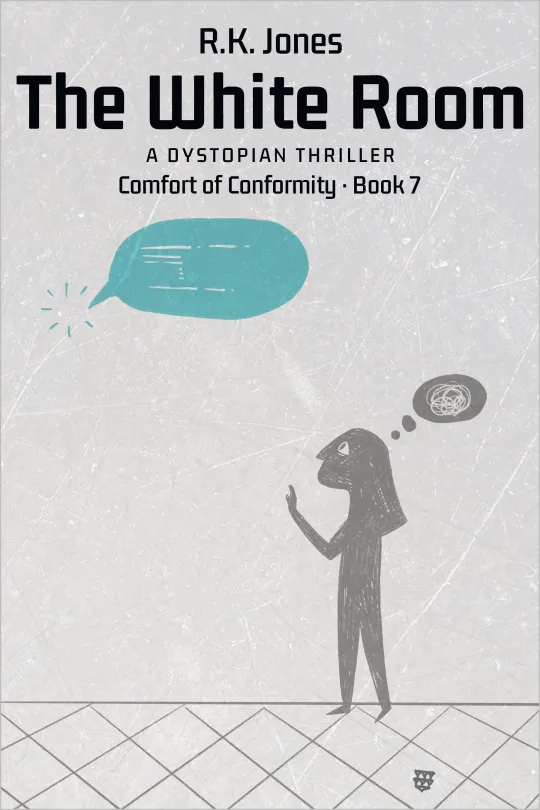
Real decoders need consent, hours of training and a scanner, and they return fragments. Fiction can skip the paperwork. R.K. Jones’s The White Room, coming soon, imagines a world where the memory machine already exists.
Centuries after the Founders came, North America is a patchwork of walled cities under an orange sky, and its people are taught that the Founders are benevolent. Kiera Meredean, wife of the Illuminate who rules the Greater Dakotas, left the city almost a year ago. Now she is back, sealed inside a white cell, while a machine draws out her memories one by one. Her husband, Christian, needs to know where she has been. But the fragments that surface make no sense: running, a cement tunnel, an old man, and a voice that keeps telling her to hide.
Those fragments sound a lot like the gist-level snippets today’s decoders produce. What the machine finds next will shake everything Christian believes about the world he rules. The White Room can be read on its own, and it belongs to the Comfort of Conformity series, which asks what you would forget to feel safe. For a mystery you can play yourself, try the free game The Empty Flat, about a neighbor erased from the records.
Sources
- Optogenetic stimulation of a hippocampal engram activates fear memory recall (Liu et al., 2012), Nature
- Researchers show that memories reside in specific brain cells, MIT News (2012)
- Neuroscientists plant false memories in the brain, MIT News (2013)
- “Lost” memories can be found, MIT News (2016)
- High-resolution image reconstruction with latent diffusion models from human brain activity (Takagi and Nishimoto), bioRxiv
- Brain-IT: Image Reconstruction from fMRI via Brain-Interaction Transformer (Beliy et al., ICLR 2026), arXiv
- Imagine That: Brain Uses Neurons from Vision System When Forming Mental Imagery, Caltech (2026)
- Brain Activity Decoder Can Reveal Stories in People’s Minds, University of Texas at Austin (2023)
- Semantic reconstruction of continuous language from non-invasive brain recordings (Tang et al., 2023), Nature Neuroscience
- Improved brain decoder holds promise for communication in people with aphasia, UT Austin College of Natural Sciences (2025)
- Mind captioning (Horikawa, 2025), project page for the Science Advances paper
- Mind captioning preprint (Horikawa), bioRxiv
- Brain-computer interface could decode inner speech in real time, Cell Press via EurekAlert (2025)
- Unlocking the Brain’s Filing Cabinet, USC Viterbi (2025)
- Fear memories require protein synthesis in the amygdala for reconsolidation after retrieval (Nader, Schafe and LeDoux, 2000), Nature
- Beyond extinction: erasing human fear responses and preventing the return of fear (Kindt, Soeter and Vervliet, 2009), Nature Neuroscience
- Reduction of PTSD symptoms with pre-reactivation propranolol therapy (Brunet et al., 2018), American Journal of Psychiatry
- Propranolol treatment of traumatic memories in adults with post-traumatic symptoms (Mela et al., 2026), European Journal of Psychiatry
- Even Chile’s neurorights leave inferred mental data in a gray zone, Stanford Law School (2026)
- The “neural data” Goldilocks problem, Future of Privacy Forum (2025)
- HB24-1058 Protect Privacy of Biological Data, Colorado General Assembly
- Delaware significantly amends its consumer data privacy law, Troutman Privacy (2026)
- S.71 (Act 145), consumer data privacy and online surveillance, Vermont General Assembly
- H.814 (Act 101), neurological rights, Vermont General Assembly
- S.2925, Management of Individuals’ Neural Data Act of 2025, GovInfo
- UNESCO adopts first global framework on neurotechnology ethics, Covington Inside Privacy (2026)
Questions people ask
Can scientists read your memories?
Not in the sense of playing back a stored memory. Current decoders can produce rough images, the gist of a story or a short description of a recalled video clip from brain activity, but only for cooperating volunteers they have been trained on, using an fMRI scanner or electrodes in the brain.
Can memories be extracted or implanted?
In mice, MIT researchers reactivated a specific fear memory with light in 2012 and created a false fear memory in 2013, using optogenetics, which cannot currently be used in humans. No one has extracted the content of a memory from a human brain.
Can AI read your mind from a brain scan?
Only in a limited way. A 2023 University of Texas decoder recovered the gist of stories people heard or imagined after about 16 hours of training scans per person, and it needed the person’s cooperation both to train and to use it.
Is there a drug that erases memories?
No. Propranolol, a beta blocker, weakened the fear attached to a memory in some studies when given around the time the memory was recalled, but clinical results are mixed, and a 2026 trial found no significant benefit over placebo. It does not delete the memory itself.
Are there laws that protect brain data?
Some. As of late 2026, Colorado, California, Montana and Connecticut have neural data protections in force, Delaware’s take effect in 2027 and Vermont’s in 2028, and Chile protects brain activity in its constitution. There is no US federal neural data law, and UNESCO’s 2025 neurotechnology recommendation is not legally binding.