Science
What Is Disease X? The WHO’s Placeholder for the Next Pandemic
Disease X isn’t a virus. It’s the World Health Organization’s name for the one nobody has found yet. Here’s where the idea came from, why COVID-19 counts, and how the world is preparing.
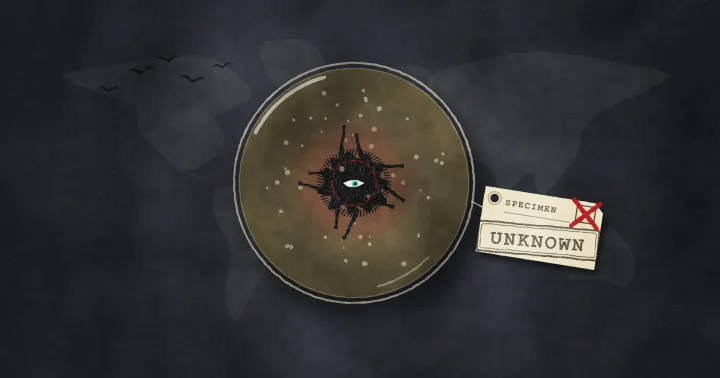
Disease X is the World Health Organization’s placeholder name for a serious epidemic or pandemic caused by a pathogen nobody has identified yet. It is not a real virus circulating today. It is a deliberate blank on WHO’s list of priority diseases, there to make sure scientists prepare for the threat they can’t name as well as the ones they can.
It sounds like science fiction, but the idea has a sober history. WHO wrote it into its research planning in 2017 and 2018, COVID-19 arrived soon after as the first real example, and in 2024 the agency overhauled its priority list with the unknown in mind. Here is what Disease X means, what it doesn’t, and how the world is getting ready for a virus that no database can identify yet.
- What it is: WHO’s name for the possibility that a serious international epidemic could be caused by a pathogen not yet known to cause human disease.
- When it started: the concept entered WHO’s priority list in 2017 and drew wide attention after the list’s review in February 2018.
- The first one: COVID-19 is widely described as the first Disease X, including by WHO’s Director-General.
- The 2024 update: WHO now studies whole families of pathogens, 28 viral families and one core group of bacteria, and calls the unknown one “Pathogen X.”
- A false alarm: a mystery illness nicknamed “Disease X” in Congo in late 2024 turned out to be familiar infections, made deadly by malaria and malnutrition.
- Getting ready: the 100 Days Mission aims for tests, treatments and vaccines within 100 days of a new threat, and WHO’s Pandemic Agreement was adopted in May 2025, though its pathogen-sharing annex is still being negotiated as of November 2026.
What is Disease X?
WHO’s R&D Blueprint, a plan to speed up research on the germs most likely to cause epidemics, keeps a short list of priority diseases. Most entries are familiar and frightening: Ebola and Marburg, Lassa fever, Nipah, Zika, MERS and SARS, Crimean-Congo hemorrhagic fever, Rift Valley fever. The last entry has no symptoms, no map and no cure, because nobody knows what it is.
In WHO’s words, Disease X “represents the knowledge that a serious international epidemic could be caused by a pathogen currently unknown to cause human disease.” A 2018 paper on the program in the journal Antiviral Research adds a useful wrinkle: Disease X could also be a known germ that has changed its behavior, for example by spreading more easily or becoming more severe.
The point of the blank is practical. A Lassa fever vaccine won’t help against something new. But fast diagnostic tests, adaptable vaccine technology, trial networks ready to start, and labs that share data quickly will help against almost anything. Naming the unknown keeps those cross-cutting tools on the agenda.
The timeline is slightly tangled. WHO’s first priority list came out in December 2015. According to that same paper, the concept of Disease X was defined in the 2017 list and added to WHO’s website in March 2017. It became famous after a review meeting in Geneva on February 6-7, 2018, when “Disease X” appeared on the published list alongside Ebola and Zika. WHO’s Director-General, Tedros Adhanom Ghebreyesus, puts the start there: “The first time we used the terminology was in 2018.”
What Disease X is not: a specific, secret or already-circulating virus. It is a planning label. If a real one appears, it will get a real name.
Was COVID-19 the first Disease X?
By WHO’s own definition, yes, and the agency’s chief has said so. On December 31, 2019, health officials in Wuhan, China, reported a cluster of pneumonia cases. The cause turned out to be a new coronavirus, now called SARS-CoV-2, and China shared its genetic sequence on January 12, 2020. A pathogen nobody had seen before, causing a serious international epidemic: that is the textbook Disease X.
Virologists Shibo Jiang and Zheng-Li Shi made the case in print almost at once. Their paper in Virologica Sinica, published online in February 2020, was titled “The First Disease X is Caused by a Highly Transmissible Acute Respiratory Syndrome Coronavirus.” In January 2024, at the World Economic Forum in Davos, Tedros told a panel called “Preparing for Disease X”:
“You may even call COVID … the first Disease X. And it may happen again.”
COVID-19 now sits on WHO’s priority list under its own name. Its cost is why the label is taken seriously: WHO estimated that about 14.9 million excess deaths were associated with the pandemic in 2020 and 2021 alone (a range of 13.3 to 16.6 million).
COVID-19 also showed what preparation buys. SARS-CoV-2 was new, but coronaviruses weren’t. Years of research on its cousins, SARS and MERS, gave scientists a head start, and that lesson shaped everything that came next.
From Disease X to Pathogen X: WHO’s 2024 priority pathogens update
In July 2024, WHO published a new framework, Pathogens prioritization, which moves the list from single diseases to whole families. More than 200 scientists from more than 50 countries assessed 28 families of viruses and one core group of bacteria, covering 1,652 pathogens. Within each family, pathogens get different roles:
- Priority pathogens are those judged most likely to cause a public health emergency of international concern. A review of the update in the journal Le Infezioni in Medicina lists examples including several influenza A subtypes (H5 among them), SARS-CoV-2, MERS, Nipah, Ebola, Marburg and Lassa viruses, plus strains of the bacteria behind cholera and plague.
- Prototype pathogens are well-studied members of each family that act, in the words of the joint WHO and CEPI announcement, as “guides or pathfinders” for research on their relatives.
- Pathogen X is WHO’s term for “an unknown pathogen with the potential to trigger a severe global epidemic.”
Pathogen X is Disease X in sharper wording: the microbe rather than the illness it causes. The bet behind the family approach is that the next unknown threat will most likely come from a family scientists already know. Understand one coronavirus or one paramyxovirus deeply, and you are partway to understanding the next. WHO plans a research consortium for each family, with a WHO Collaborating Center as its hub.
“History teaches us that the next pandemic is a matter of when, not if,” Tedros said in that announcement.
What was the “Disease X” outbreak in Congo?
In late 2024 the label made headlines of a different kind. In Panzi, a remote rural health zone in Kwango Province in the southwest of the Democratic Republic of the Congo, people were falling ill with fever, headache, cough, runny nose and body aches, and some were dying. On December 8, 2024, WHO reported 406 cases and 31 deaths since late October. Most cases were children, particularly under five, and all the severe cases were reported to be severely malnourished. Samples had to travel to Kinshasa, about 48 hours by road in the rainy season. News reports started calling it “Disease X.”
The answer turned out to be grimly familiar. On December 27, WHO renamed the event acute respiratory infections complicated by malaria. By then it counted 891 cases and 48 deaths. Tests pointed to a combination of common viral respiratory infections, among them influenza A (H1N1) and rhinoviruses, together with falciparum malaria, all made worse by acute malnutrition.
The lesson is that “undiagnosed” is not the same as “unknown to science.” Poverty, hunger and distance from a laboratory can make ordinary diseases look mysterious, and just as deadly. It is also a reminder of why local diagnosis matters: WHO said the area’s remoteness and limited diagnostic capacity had delayed finding the cause.
How do scientists prepare for the next pandemic?
You can’t make a vaccine for a virus that hasn’t been found. You can shorten the time it takes once it is. Three strategies do most of the work.
Watch the animal frontier. According to the CDC, three out of every four new or emerging infectious diseases in people come from animals. Watching wildlife, livestock and the people who work with them is the early-warning system.
Study the families. CEPI, the Coalition for Epidemic Preparedness Innovations, has argued that the viruses known to infect humans fall into about 25 families, and that prototype vaccines for representative members could be “pulled off the shelf” and adapted when a relative emerges. COVID-19 showed how this can work. In 2017 a research team working on MERS published a “generalizable strategy” for locking coronavirus spike proteins into the shape the immune system targets best. When SARS-CoV-2 appeared, the same design principle was applied to its spike. A 2020 paper in Nature on the resulting mRNA vaccine, mRNA-1273, carried the title “SARS-CoV-2 mRNA vaccine design enabled by prototype pathogen preparedness.”
Race the clock. The 100 Days Mission was set out in June 2021 in a report to the G7 by a pandemic preparedness partnership chaired by Sir Patrick Vallance, then the UK government’s chief scientific adviser, and discussed by G7 leaders at their Carbis Bay summit that month. The goal: safe, effective diagnostics, treatments and vaccines within 100 days of a pandemic threat being identified. The report noted that COVID-19 vaccines took 307 days, already remarkable for vaccines that can take up to 15 years to develop.
Progress is real but uneven. In February 2026, CEPI launched CEPI 3.0, a five-year strategy due to begin in 2027 and built around the 100 Days Mission. It needs US$3.6 billion in total, with $1.1 billion already secured. CEPI now describes Disease X simply as “the pathogen we can’t predict.” But the fifth 100 Days Mission implementation report, published in January 2026 by the International Pandemic Preparedness Secretariat, found the 100-day target “not yet achievable in many areas,” with research investment in pandemic countermeasures falling and pipelines uneven and early-stage.
The WHO Pandemic Agreement: where does it stand in late 2026?
Preparing for Disease X is not only a laboratory problem. It is also about how fast countries share samples and genetic data, and who gets the vaccines that result. The WHO Pandemic Agreement is meant to make the world, in WHO’s phrase, “more equitable and safer from future pandemics.”
After talks that began in late 2021, governments adopted it by consensus at the World Health Assembly on May 20, 2025, following a committee vote the day before of 124 in favor, none against and 11 abstentions. Its main pieces:
- a Pathogen Access and Benefit-Sharing (PABS) system, so dangerous pathogens and their genetic sequences are shared quickly and the benefits are shared fairly;
- a target for participating manufacturers to give WHO rapid access to 20% of their real-time production of vaccines, treatments and tests during a pandemic emergency;
- stronger disease surveillance with a One Health approach, local production and technology transfer, and a WHO-coordinated global supply chain and logistics network.
WHO stresses that the agreement gives it no authority to impose measures such as lockdowns or vaccine mandates on any country.
There is a catch. The agreement can’t open for signature until the PABS annex, the detailed rulebook for that sharing system, is adopted. In May 2026, the World Health Assembly gave negotiators more time. Their ninth round ran from November 2 to 13, 2026, and ended with member states reaffirming their aim to finish in time for the World Health Assembly in May 2027, with formal sessions scheduled for January, February and March. After that, the agreement enters into force 30 days after 60 countries have ratified it.
Other rules have already changed. Amendments to the International Health Regulations entered into force on September 19, 2025, adding a new top alert level, a “pandemic emergency,” above the familiar public health emergency of international concern. The United States completed its withdrawal from WHO in January 2026, and on October 12, 2026, it was one of three countries to vote against a UN General Assembly political declaration on pandemic preparedness, which passed with 153 votes in favor.
None of this means a Disease X is on its way. It means the world has admitted it will be surprised again and is trying to make the surprise shorter. If you’re worried about a particular illness or symptoms, talk to a doctor or your local health authority rather than a headline.
A virus no database can identify: the idea behind Going Viral
Every Disease X begins the same way, with a sample that doesn’t match anything on file. That is the premise of R.K. Jones’s post-apocalyptic thriller Going Viral, Book 1 of the Comfort of Conformity series.
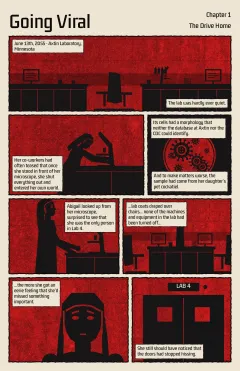
Dr. Abigail Swanson studies viruses for a living. On June 13, 2055, the sample under her microscope holds cells no database can identify. The birds outside her Minnesota home have started killing each other. By nightfall, so have the people. Within days her family is torn apart and the country she knew is gone. With her young daughter Sapphire and a handful of strangers, Abigail heads south for a forest in Alabama, hoping to build something worth surviving for.
But the infected aren’t the only danger. Missiles are falling on towns with people still in them, and the survivors on the road can be as deadly as anything they’re running from. And on that very first day, a military drone racing toward Abigail’s car seemed to speak her name.
Real preparedness is about buying time with prototypes, labs and treaties. Going Viral asks what happens when there is no time at all. It’s coming soon; in the meantime, the site’s free games are ready to play.
Sources
- Prioritizing diseases for research and development in emergency contexts, World Health Organization
- 2018 Annual review of diseases prioritized under the Research and Development Blueprint, World Health Organization
- WHO publishes list of top emerging diseases likely to cause major epidemics (2015), World Health Organization
- The WHO R&D Blueprint: 2018 review of emerging infectious diseases requiring urgent research and development efforts, Si Mehand et al., Antiviral Research
- The First Disease X is Caused by a Highly Transmissible Acute Respiratory Syndrome Coronavirus, Jiang and Shi, Virologica Sinica (2020)
- What’s Disease X? World leaders discuss next possible global health threat, Global News
- Archived: WHO Timeline - COVID-19, World Health Organization
- 14.9 million excess deaths were associated with the COVID-19 pandemic in 2020 and 2021, World Health Organization
- Pathogens prioritization: a scientific framework for epidemic and pandemic research preparedness, World Health Organization (2024)
- CEPI and WHO urge broader research strategy for countries to prepare for the next pandemic, World Health Organization
- Research response to Pathogen X during a pandemic, World Health Organization
- Updated WHO list of emerging pathogens for a potential future pandemic, Ukoaka et al., Le Infezioni in Medicina (2024)
- Undiagnosed disease, Democratic Republic of the Congo, Disease Outbreak News, World Health Organization (8 December 2024)
- Acute respiratory infections complicated by malaria, Democratic Republic of the Congo, Disease Outbreak News, World Health Organization (27 December 2024)
- About Zoonotic Diseases, Centers for Disease Control and Prevention
- Preparing for the next Disease X, CEPI
- Immunogenicity and structures of a rationally designed prefusion MERS-CoV spike antigen, Pallesen et al., PNAS (2017)
- SARS-CoV-2 mRNA vaccine design enabled by prototype pathogen preparedness, Corbett et al., Nature (2020)
- 100 Days Mission to respond to future pandemic threats, report to the G7, GOV.UK
- G7 Discuss 100 Days Mission to Improve Readiness for Future Pandemics, G7 Information Centre, University of Toronto
- CEPI launches global plan to secure the future against epidemic and pandemic threats, CEPI (2026)
- CEPI 3.0 explained: Vaccines and viral families, CEPI (2026)
- Pandemic preparedness slipping just as global risks grow, new 100 Days Mission report warns, International Pandemic Preparedness Secretariat (2026)
- World Health Assembly adopts historic Pandemic Agreement, World Health Organization (2025)
- Pandemic Agreement (health topic), World Health Organization
- Seventy-ninth World Health Assembly, daily update 19 May 2026, World Health Organization
- Member States reiterate commitment to finalize Pandemic Agreement PABS Annex by May 2027, World Health Organization (2026)
- Amended International Health Regulations enter into force, World Health Organization (2025)
- United States Completes WHO Withdrawal, CDC (2026)
- With Only Three ‘No’ Votes, UN Adopts Political Declaration on Pandemic Preparedness, Health Policy Watch
Questions people ask
What is Disease X?
Disease X is the World Health Organization’s placeholder for a serious international epidemic caused by a pathogen not yet known to cause human disease. It sits on WHO’s list of priority diseases so that research also prepares for threats nobody can name yet.
Is Disease X a real virus?
No. Disease X is a planning label, not a specific virus. Outbreaks are sometimes nicknamed “Disease X” in the news, like the mystery illness in Congo’s Panzi health zone in late 2024, which WHO traced to common respiratory viruses and malaria, made worse by malnutrition.
Was COVID-19 Disease X?
It is widely described as the first Disease X, because it was caused by a coronavirus never before identified in people. Virologists Shibo Jiang and Zheng-Li Shi argued this in February 2020, and WHO Director-General Tedros Adhanom Ghebreyesus said in 2024 that COVID could be called the first Disease X.
What is Pathogen X?
Pathogen X is the term used in WHO’s 2024 pathogen prioritization work for an unknown pathogen with the potential to trigger a severe global epidemic. WHO now studies whole families of viruses and bacteria, so that what scientists know about known relatives can speed up the response to a new one.
Is the WHO Pandemic Agreement in force?
Not yet. WHO member states adopted the Pandemic Agreement on May 20, 2025, but it cannot open for signature until its Pathogen Access and Benefit-Sharing annex is adopted, which negotiators aim to finish by the World Health Assembly in May 2027. It then enters into force 30 days after 60 countries ratify it.