History
Punished for Your Parents’ Crimes: North Korea, the Nazis and Stalin
Can a state punish you for your parents’ crimes? North Korea still does. Here is the real history of kin punishment, from Nazi Sippenhaft and Stalin’s camps to imperial China, and why modern law says guilt is personal.
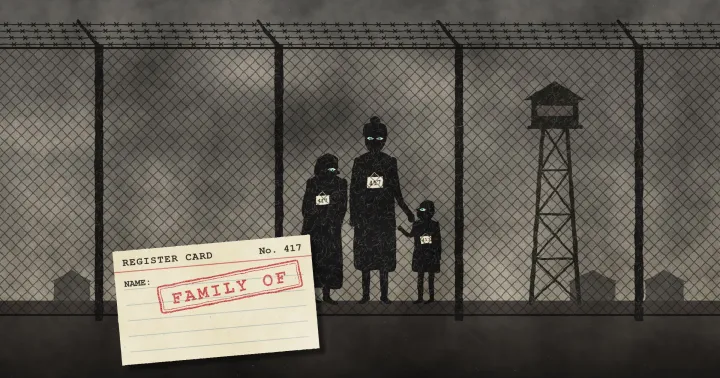
Can you be punished for your parents’ crimes? Not under the principles of modern international law, which hold that guilt is personal. But plenty of states have done it, and at least one still does: North Korea has sent whole families to political prison camps for a relative’s “political crime,” reaching back three generations, a practice a UN inquiry called guilt by association.
The idea has a long pedigree. Nazi Germany called it Sippenhaft. Stalin’s Soviet Union made the wives and children of “traitors to the Motherland” a category of prisoner, and imperial China could put a traitor’s extended family to death. Against them stands a principle written into the Nuremberg judgment, the Geneva Conventions and the UN Convention on the Rights of the Child: you answer for what you did, not for who your mother or father was.
Key facts at a glance:
- North Korea: a 2014 UN Commission of Inquiry found that entire families had been sent to political prison camps for crimes of close relatives “including forebears, to the third generation,” and estimated 80,000 to 120,000 political prisoners in four large camps.
- Nazi Germany: after the failed bomb plot against Hitler on 20 July 1944, the Gestapo arrested more than 140 of the plotters’ relatives in July and August alone, and their children were held under new names in a home in Bad Sachsa.
- Soviet Union: NKVD Order No. 00486 of 15 August 1937 targeted the wives and children of men condemned as traitors. More than 18,000 wives were arrested and about 25,000 children were taken from their families.
- Imperial China: for treason, the law could punish a criminal’s relatives too, in its extreme form the “nine familial exterminations.” The Qing court abolished the punishment of relatives in 1905.
- The law today: the Fourth Geneva Convention (1949) says no protected person “may be punished for an offence he or she has not personally committed.”
What is North Korea’s three generations punishment?
North Korea is the best-documented modern case. In February 2014 a UN Commission of Inquiry chaired by Michael Kirby, a retired Australian judge, published its report on human rights in North Korea. It describes people accused of major political crimes being made to disappear, without trial, into political prison camps known as kwanliso.
Then comes the passage behind the phrase “three generations.” In the past, the commission found, it was common for the authorities to send entire families to the camps for political crimes committed by close relatives, “including forebears, to the third generation,” on the principle of guilt by association. In practice, a person could be imprisoned for a grandparent’s alleged crime.
The commission was careful about the present tense. Such cases “still occur, but appear to be less frequent now than in past decades.” It estimated that 80,000 to 120,000 political prisoners were held in four large camps, whose existence the government denies, and that hundreds of thousands of prisoners had died in them over five decades. It found crimes against humanity, urged a referral to the International Criminal Court, and told North Korea to “end reprisals against persons on the basis of guilt by association.”
Family shapes life outside the camps too. The commission described songbun, a system that classifies people “on the basis of State-assigned social class and birth.” It has long shaped where people may live, what work they get, whether they reach university and even whom they may marry.
In September 2025 the UN Human Rights Office reported that the situation had not improved and, in many instances, had degraded. Political prison camps “continue to operate,” and the immediate steps the report urged included ending “the system of political prison camps and guilt by association.” Human Rights Watch’s World Report 2026 notes that as North Korean troops fought in Russia’s war against Ukraine, state media glorified soldiers’ suicides as “heroic sacrifices” while “threatening retaliation against soldiers’ families.” On 18 November 2026 a UN General Assembly committee adopted its 22nd straight resolution on North Korea’s human rights record.
What was Sippenhaft? Nazi Germany after the July 1944 plot
Sippenhaft means kin liability: the idea that a family, or Sippe, shares responsibility for the crime of one member. The Nazi regime used it most openly after 20 July 1944, when Colonel Claus Schenk Graf von Stauffenberg’s bomb failed to kill Hitler and the coup collapsed.
Heinrich Himmler sold it as “an old Germanic law.” Speaking to army officers on 25 July, he spelled out the logic, in the historian Robert Loeffel’s translation:
A man has committed treason, the blood is bad, there is traitor blood in it, and it will be exterminated.
About two weeks after the plot, Himmler told the party’s regional leaders that Stauffenberg’s family would be wiped out “down to the last member.” The Buchenwald Memorial points out that this kind of kin liability was illegal even under the Third Reich’s own law.
The arrests were real, if uneven. In July and August 1944 alone, the Gestapo took more than 140 people from more than 30 families into custody, and one estimate puts the total of Sippenhaft prisoners linked to the plot at about 180. Grandparents, in-laws, brothers, sisters and children were taken, some only a few weeks old. Stauffenberg’s wife, Nina, was pregnant when the Gestapo arrested her, and she gave birth to their daughter in custody in January 1945.
From August 1944 the plotters’ children were held in a children’s home in Bad Sachsa. According to the German Resistance Memorial Center, they were given new first names and surnames, and siblings were often separated. When some mothers were released in late September, the Gestapo returned their children, who were “no longer needed to place pressure on their fathers.” The rest were still there when American troops arrived on 12 April 1945. The adult “kin prisoners,” moved from camp to camp, were freed by US troops in South Tyrol on 4 May 1945.
By then the threat had spread to ordinary soldiers. An order signed by Field Marshal Wilhelm Keitel on 19 November 1944 called for Sippenhaft against the families of deserters, and Allied interrogators found German prisoners seriously afraid for their families. That fear was the point.
“A son does not answer for his father”: Stalin’s families of traitors
In December 1935, at a meeting in Moscow between leading combine-harvester operators and the party leadership, a young operator announced that although he was a kulak’s son, he would work honestly for socialism. Stalin answered with a line that newspapers later presented as an official instruction: “A son does not answer for his father.”
Less than two years later, the secret police did the opposite. NKVD Operational Order No. 00486, signed by Nikolai Yezhov on 15 August 1937 during the Great Terror, set out to “repress” the wives and children of men convicted as traitors. According to the historian Nikita Petrov, Stalin rejected a draft camp term of five years for the wives and wrote in up to eight. Children under 15 were sent to special children’s homes, while older children judged “socially dangerous” could be arrested themselves. Petrov counts more than 18,000 wives arrested and about 25,000 children taken from their families. The official label became an acronym, ChSIR: “member of the family of a traitor to the Motherland.”
Many of the wives ended up at ALZhIR, the Akmolinsk camp for wives of traitors to the Motherland, in Kazakhstan near today’s capital, Astana. It ran from 1938 to 1953. Radio Free Europe/Radio Liberty reports that nearly 18,000 women passed through it and about 600 died there, and that 1,507 children were born in the camp and sent to orphanages at the age of three. Their offense was their marriage.
The policy softened in October 1938, when a new order said wives should no longer be arrested automatically with their husbands.
Imperial China and the nine familial exterminations
The idea is ancient. The state of Qin organized households into mutual-responsibility “groups of five” that had to watch one another and report crimes. As the historian Sarah Schneewind summarizes it, “A person’s relatives were held guilty alongside him,” and so was his group of five if it had failed to report him.
Later dynasties kept collective punishment for the gravest crimes, chiefly treason and rebellion. Its most extreme form, remembered as the “nine familial exterminations,” could reach a criminal’s parents, grandparents, children, siblings, cousins and in-laws, though it was rarely imposed.
The most famous case is probably part legend. In 1402, after the Yongle Emperor seized the Ming throne, the scholar Fang Xiaoru refused to write a proclamation legitimizing him and was put to death. A 17th-century account has the emperor threatening nine degrees of kin and Fang offering ten. His students and friends were then counted as the tenth group, and 873 people are said to have been executed. Historians regard much of the story as later embellishment.
Punishing relatives survived almost to the end of the empire. In April 1905 the Qing law reformers Shen Jiaben and Wu Tingfang won approval for a memorial abolishing death by slicing and other “cruel punishments.” As the American legation in Peking reported that month, the throne also agreed to abolish the practice of “punishing the relatives of a criminal as well as the criminal himself.”
Why do regimes punish families?
Why do governments keep reaching for something so plainly unjust? The cases above suggest four overlapping reasons.
- Hostages. A family in custody is leverage over the person still free. The Bad Sachsa children were handed back once they no longer served to pressure their fathers.
- Deterrence. It is aimed less at the guilty than at everyone watching. Loeffel argues that Sippenhaft was enforced weakly but spread fear all the same.
- Bad blood. The language is biological: Himmler’s “traitor blood,” North Korea’s inherited songbun, imperial China’s clan lines. If disloyalty runs in the blood, the whole line is suspect.
- Erasure. New names, separated siblings and state children’s homes break a family’s identity, not just its freedom. The Berlin exhibition about the Bad Sachsa children is called “Our true identity was to be destroyed.”
The tactic has not vanished. Rights groups describe pressure on the relatives of exiled dissidents as collective punishment. In February 2026 a Hong Kong court convicted Kwok Yin-sang, the father of the U.S.-based activist Anna Kwok, who is wanted by the city’s police with a HK$1 million bounty. His offense under the national security law was trying to withdraw money from an education savings insurance policy he had bought for her when she was two. He was jailed for eight months. The prosecution treated it as dealing with a wanted “absconder’s” funds; Human Rights Watch called it the first time Hong Kong had convicted a family member over an overseas activist’s peaceful advocacy.
Why modern law says guilt is personal
The opposite principle is ancient too. The Hebrew Bible states it plainly: “The fathers shall not be put to death for the children, neither shall the children be put to death for the fathers” (Deuteronomy 24:16, King James Version).
English common law had its own form of inherited penalty. A person convicted of treason or felony could be “attainted,” and attainder brought “corruption of blood”: descendants could not inherit from or through the condemned person. The US Constitution limited it at the founding: “no Attainder of Treason shall work Corruption of Blood, or Forfeiture except during the Life of the Person attainted.” England abolished it for good in the Forfeiture Act 1870.
The twentieth century’s catastrophes pushed the principle into international law. In its judgment of 1 October 1946, the Nuremberg tribunal declared: “Crimes against international law are committed by men, not by abstract entities.” Even when it branded the SS and the Gestapo criminal organizations, the judgment stressed “that criminal guilt is personal, and that mass punishments should be avoided.” Three years later, Article 33 of the Fourth Geneva Convention banned punishing civilians for offenses they had not personally committed and prohibited “collective penalties.”
For children the rule is spelled out. Article 2 of the UN Convention on the Rights of the Child, adopted in 1989, requires states to protect children against “all forms of discrimination or punishment” based on the status, activities, expressed opinions or beliefs of their parents, guardians or family members. It has 196 parties, North Korea among them since 1990. Across the border, South Korea’s constitution says it in one line: “No citizen shall suffer unfavorable treatment on account of an act not of his own doing but committed by a relative.”
A daughter on trial for her mother’s crimes: The Founders’ Peace
That old fear, of a child made to answer for a parent, drives R.K. Jones’s coming-soon thriller The Founders’ Peace, Book 5 of the Comfort of Conformity series.
Sapphire has until her twentieth birthday. Then Dallas can put her on trial for her mother’s crimes.
For four years Sapphire has lived as a number inside the Dallas Safe Zone: registered, watched, and taken to the tower whenever the Elders want answers. Then, in the middle of a nationwide blackout, her mother, Abigail, comes home after almost five years away, to a country the Founders have locked down and a daughter held by Simone, who has her own plans for them both. To get her out, Abigail will have to break into a Safe Zone ruled by Elders, watched by drones, and run by the one woman who knows exactly what Sapphire is worth to her.
If you like mysteries about people the state has decided to erase, try the free game The Empty Flat, about a neighbor erased from the records.
Sources
- Report of the commission of inquiry on human rights in the Democratic People’s Republic of Korea (A/HRC/25/63, 2014), United Nations
- UN-mandated human rights inquiry on DPR Korea documents “widespread, systematic abuses,” UN News (2014)
- DPRK: UN human rights report finds 10 years of increased suffering, repression and fear, UN Geneva newsroom (2025)
- World Report 2026: North Korea, Human Rights Watch
- UN committee adopts N. Korean human rights resolution for 22nd year, The Korea Times (2026)
- Robert Loeffel, Sippenhaft, Terror and Fear in Nazi Germany, Contemporary European History (2007)
- The von Stauffenberg family (audio), Buchenwald Memorial
- The Stauffenberg family (biography), Buchenwald Memorial
- Nina Schenk Gräfin von Stauffenberg, Wikipedia
- “Our true identity was to be destroyed”: the children consigned to Bad Sachsa after July 20, 1944, German Resistance Memorial Center
- Documents of the past (on “A son does not answer for his father”), Radio Svoboda (2005, in Russian)
- Nikita Petrov, Wives who denounced their husbands are not to be arrested, Novaya Gazeta (2021, in Russian)
- Sergei Baimukhametov, A ticket to ALZhIR, Novaya Gazeta (2017, in Russian)
- Family members of a traitor to the Motherland, Wikipedia
- Kazakhstan’s Concentration Camp for “Wives of Traitors to the Motherland,” RFE/RL (2024)
- Sarah Schneewind, Surveillance and Law, An Outline History of East Asia to 1200, LibreTexts
- Nine familial exterminations, Wikipedia
- Fang Xiaoru, Wikipedia
- Papers Relating to the Foreign Relations of the United States, 1905, Document 207, Office of the Historian
- Jérôme Bourgon, Abolishing “Cruel Punishments,” Modern Asian Studies (2003)
- Hong Kong: Conviction of Activist’s Father a Grim Milestone, Human Rights Watch (2026)
- Father of U.S.-based activist sentenced in Hong Kong under national security law, KPBS/NPR (2026)
- Deuteronomy 24:16 (KJV), Bible Gateway
- The Constitution of the United States: A Transcription, National Archives
- Corruption of blood, Wikipedia
- Forfeiture Act 1870, section 1 (as enacted), legislation.gov.uk
- International Military Tribunal at Nuremberg, Holocaust Encyclopedia, USHMM
- Judgment: The Accused Organizations, International Military Tribunal, Avalon Project, Yale Law School
- Judgment: The Law of the Charter, International Military Tribunal, Avalon Project, Yale Law School
- Geneva Convention relative to the Protection of Civilian Persons in Time of War (1949), Avalon Project, Yale Law School
- Convention on the Rights of the Child (text), UNICEF
- Convention on the Rights of the Child: status of ratification, United Nations Treaty Collection
- Constitution of the Republic of Korea (1987), Constitute Project
Questions people ask
Can you be punished for your parents’ crimes?
Not under modern international law, which holds that criminal guilt is personal. The Fourth Geneva Convention bans punishing people for offenses they did not personally commit, and the UN Convention on the Rights of the Child protects children from punishment based on their parents’ activities. Some states have done it anyway, notably North Korea, Nazi Germany and the Soviet Union.
What is North Korea’s three generations punishment?
It is the practice, documented by a UN Commission of Inquiry in 2014, of sending entire families to political prison camps for political crimes committed by close relatives, including forebears up to the third generation, on the principle of guilt by association. In September 2025 the UN Human Rights Office reported that the camps continue to operate and urged an end to guilt by association.
What is it called when you are punished for a family member’s crime?
It is usually called collective punishment, kin punishment or guilt by association. Nazi Germany called it Sippenhaft (kin liability), the Soviet Union labeled such relatives ChSIR (members of the family of a traitor to the Motherland), and old English law used attainder and “corruption of blood” to stop a traitor’s descendants from inheriting.
What was Sippenhaft in Nazi Germany?
Sippenhaft, German for kin liability, was the punishment of a person’s relatives for his crime. After the failed 20 July 1944 plot against Hitler, the Gestapo took more than 140 of the plotters’ relatives into custody in July and August alone, and held their children under new names in a children’s home in Bad Sachsa.
Who said “a son does not answer for his father”?
Stalin, in December 1935, replying to a young combine-harvester operator who said he was a kulak’s son but would work honestly for socialism. Less than two years later, NKVD Order No. 00486 of 15 August 1937 launched the repression of the wives and children of men convicted as traitors.